

In recent years, law firms have been pouring money into Google Ads, Local Services Ads, billboards, & television spots. Marketing budgets have never been higher. Yet many of these same firms are bleeding leads because of basic phone system mistakes that could be fixed in a week.
Here’s the uncomfortable reality: studies consistently show that nearly half of all calls to law offices go unanswered or are mishandled. The majority of those missed calls are never returned. When a prospective client calls your firm after a car accident, a DUI arrest, or a family crisis, they’re not waiting around. They’re calling the next firm on Google within minutes.
Missing these calls means your firm is unable to deliver timely legal services to clients in need, directly impacting client satisfaction and the overall effectiveness of your legal services.
Attorneys & firm admins who want to quickly audit & fix their phone setup should find this article helpful. We’ll walk through the most common mistakes law firms make with their phone systems—from personal cell phones to nonexistent after-hours plans—and show you exactly how to solve each one.
Mistake #1: Letting Partners & Associates Use Personal Cell Phones
Personal numbers also fragment call handling into an unstructured, inconsistent process. When the only person answering is whoever happens to pick up their cell, there’s no oversight, no customized scripts, and no lead tracking. Capturing lead information & tracking interactions during the first call is crucial for effective follow-up and higher conversion rates; missing this step means lost opportunities. You can’t build processes around chaos.
Mistake #2: No Real Intake Routing – Every Call Rings the Front Desk
Picture this: your receptionist is at the front desk with phones ringing on three lines. A walk-in client needs directions to the conference room. The email notification is pinging about an urgent court filing. Meanwhile, a new client from your Google Ads campaign has been on hold for four minutes. They hang up.
This is what happens when most firms rely on a single point of failure for all inbound calls. The “one line to the front desk” model collapses the moment you run any meaningful advertising or handle multiple practice areas under one roof.
Why this approach fails:
- New leads get mixed in with existing client status calls, vendor inquiries, and court reminders
- No prioritization—a $50,000 personal injury case gets the same treatment as a calendar confirmation
- Over-reliance on a single receptionist who may be overwhelmed, out sick, or on lunch
- During a large volume of calls, hold times spike and callers abandon
Without proper systems for call routing, your marketing campaigns routinely hit voicemail or endless hold music. You’re paying money to drive phone calls, then losing those callers before anyone even speaks to them. Smart call routing separates new clients from existing clients. It ensures intake staff get priority calls first while routine status updates go to case managers.
Talkroute supports IVR/auto-attendant functionality (“Press 1 if you’re a new client, Press 2 for case status”) and skills-based routing so your intake team handles qualified leads while other calls flow to the appropriate person. This isn’t complicated technology—it’s building processes that respect the value of every call.
Mistake #3: Treating Voicemail as Your “After‑Hours Plan”
Let’s be direct: these days, voicemail alone is effectively the same as being closed. Most people will not leave a voicemail & will simply call the next firm they find on Google.
Research consistently shows that more than half of callers who reach voicemail will not leave a message. They’ll hang up, search again, and call your competitor who answered live. By the time you check messages Monday morning, that lead has long since signed a retainer elsewhere.
This is especially damaging for practice areas where emergencies don’t wait for normal business hours:
- DUI arrests happen at 2 a.m. on Saturday
- Domestic violence incidents occur on holidays
- Personal injury accidents happen during evening commutes
- Immigration emergencies can strike any time
These are often high-value matters with clients who need immediate reassurance. If your after-hours plan is a generic voicemail greeting, you’re leaving money on the table and failing interested clients when they need you most.
An effective after-hours setup includes:
- Conditional call forwarding to an on-call attorney for urgent matters
- Time-based routing that distinguishes weeknights, weekends, and holidays
- Clear rules: patch through potential new matters; take messages for routine status calls. However, simply taking messages from every caller is insufficient—prioritizing and customizing call responses is necessary to improve efficiency and lead qualification.
- Escalation paths (ring virtual receptionist first, then on-call lawyer if urgent)
Talkroute implements time-based routing and escalations without requiring new hardware. You can set up after-hours rules in minutes, ensuring that when phones are ringing at 10 p.m. with a potential client, someone is there to answer—or at minimum, the caller gets a professional response that keeps them engaged until business hours resume.
Mistake #4: Overpaying for Antiquated, Feature-Stuffed Phone Systems You Don’t Use
Walk into many small firms and you’ll find a dusty PBX system in a server closet—installed pre-COVID, still under contract, still charging monthly maintenance fees. The desk phones gather dust because everyone uses their cell phones anyway. The fax lines nobody uses still cost $50 a month each.
This is one of the most common mistakes we see: paying for technology you don’t actually use.
Typical waste in legacy phone setups:
|
Expense |
Reality |
|---|---|
|
Physical desk phones for 15 users |
Only 4 people ever use them |
|
On-premise voicemail server |
Staff check voicemail on their cells |
|
8 fax lines |
1 is used monthly; the rest are dormant |
|
“Enterprise” VoIP licenses |
Features like video conferencing never activated |
|
Long-term contracts |
Locked in for 3 years with no flexibility |
A 10-user firm can easily waste $500-1,000 per month on under-utilized landlines and legacy VoIP licenses. That’s $6,000-12,000 per year that could go toward marketing, staffing, or better intake tools.
The opportunity cost matters too. Money tied up in outdated hardware is money not spent on automation, client service improvements, or answering service overflow coverage.
Virtual systems like Talkroute use your existing smartphones, laptops, and headsets. There’s month-to-month pricing with no long-term contracts. You can scale up or down by user as your firm grows or contracts. You pay for what you actually use. Modern solutions are tailored for law firms, providing sophisticated tools that improve lead qualification, enhance client experience, and boost overall firm performance.
Try this quick phone bill audit:
- List every phone line and number you pay for
- List every feature or license in your current plan
- Match each against active users and real-world usage
- Calculate what you’re paying for versus what you actually need
Most attorneys who do this exercise discover they’re paying for half again what they actually use.
Mistake #5: Ignoring Call Data – Flying Blind on Intake Performance

Here’s a question that should be easy to answer: How many calls did your firm receive last month, and how many became signed clients?
If you can’t answer that with confidence, you’re flying blind on intake performance. And you’re far from alone—most firms have no idea how many calls they miss, how long callers wait, or which marketing channels produce valuable cases.
This creates serious problems for decision-making. You might cut a profitable Google Ads campaign because you think it’s not working, when in reality your intake process is failing to convert the leads it generates. You might blame marketing when the problem is actually missing calls during lunch hour.
Metrics a modern phone system should provide:
- Total calls received by day, week, and month
- Missed call counts and percentages
- Average answer time and hold duration
- Call duration by campaign number or source
- Peak call times by day of week
- Conversion tracking from call to consultation
Consider this example: a personal injury firm spending $8,000 monthly on ads discovered through call data that 30% of their calls were missed during the lunch hour from 12-1 p.m. The solution was simple—they adjusted routing to ensure coverage during that window. Within 60 days, they were scheduling 15% more consultations with no increase in ad spend.
Call reports provide this visibility. You can create separate tracking numbers for each campaign—billboards, LSAs, referral postcards, web forms—and see exactly which calls convert into consultations. Data turns guessing into knowing.
Mistake #6: No Clear Ownership of the Phone System or Intake Process
At many law firms, the phone system is “everyone’s job,” which in practice means it’s nobody’s job. The office manager orders the phones. IT configures them (badly). Partners handle on-call rotation via a group text that nobody checks. Intake scripts are informal, outdated, or nonexistent.
This fragmentation means nobody is responsible for designing and maintaining a proper system. Nobody reviews whether calls are being answered within three rings. Nobody tracks whether missed calls get returned within one business day. AND nobody updates the after-hours greeting when the on-call attorney changes.
Every law office needs a designated owner for the phone system and intake process. This might be the firm administrator, managing partner, or marketing director—but someone must be accountable.
That owner’s responsibilities include:
- Defining how new leads are routed versus existing client calls
- Setting standards for ring time and callback windows
- Maintaining after-hours rules and holiday coverage
- Regularly reviewing phone reports for missed calls and performance issues
- Ensuring firm wide standards are documented and followed
- Training staff on proper systems for answering the phone
- Updating scripts and flows as practice areas evolve
Consolidating everything into a single virtual phone platform like Talkroute makes ownership dramatically easier. That one person can adjust routing, add or remove users, and enforce standards across locations—all from a single dashboard. They can communicate changes to the team in the same way every time, rather than coordinating across fragmented legacy systems.
Ask yourself: does your firm have a documented intake process? Does someone review call data monthly? Is there a written policy for after-hours coverage? If you answered “no” to any of these, you have an ownership problem.
The Benefits of an Answering Service for Law Firms
For law firms, every phone call is a potential new client—and every missed call is a missed opportunity. During normal business hours, when most potential clients are reaching out with urgent legal issues, it’s crucial that someone is always available to answer. Yet, one of the most common mistakes law firms make is relying on overburdened staff or outdated systems, leading to missed calls, frustrated clients, and lost revenue.
For small firms and solo practitioners, an answering service can be a game-changer. It allows you to handle a large volume of calls without sacrificing the quality of your client interactions. Instead of letting calls go to voicemail or forcing clients to wait on hold, an answering service provides a friendly, knowledgeable voice. Who can then gather essential information, prioritize urgent matters, and route qualified leads to the right person. This not only streamlines your intake process but also ensures that no potential client slips through the cracks.
Using an answering service also helps law firms avoid some of the most common mistakes in call handling—such as lacking a clear intake process, failing to prioritize client calls, or not using technology to manage call flow efficiently. With a professional service in place, your firm can implement proper systems that guarantee consistency, professionalism, and a positive client experience every time the phone rings.
Cost is always a consideration, but an answering service is often a highly cost-effective investment. By capturing more qualified leads and reducing the risk of missing calls, law firms can increase their revenue and make better use of their marketing spend. Additionally, many answering services offer data and reporting features that provide valuable insights into call volume, peak hours, and client needs—helping you refine your processes and make smarter business decisions.
How to Fix Your Law Firm’s Phone System in 3 Clean Steps
If you recognized your firm in one or more of the mistakes above, don’t panic. These problems are fixable, often in under a week. Here’s a concise roadmap to move in the right direction.
Step 1: Audit
Before you change anything, map what you currently have. This means documenting every published phone number across your website, Google Business Profile, ads, and business cards. For each number, note who answers it, what hours it’s covered, and what happens after hours.
Most firms doing this audit for the first time discover numbers they forgot about, routing rules that make no sense, and after-hours plans that are effectively nonexistent.
Step 2: Redesign
With your audit complete, redesign your call flows with intention. Define separate paths for new clients versus existing clients. If you handle multiple practice areas, create routing by specialty. Establish clear rules for business hours versus after-hours coverage.
Set concrete goals: answer within three rings, return missed calls within one business day, never send a first-time caller straight to voicemail. These goals become your standards for client satisfaction and client experience.
Step 3: Implement with a Modern Virtual Phone System
Now execute your redesign with technology that supports it. Talkroute offers everything law firms need: call routing, call recording for quality and compliance, mobile apps for attorneys on the go, texting with clients, and analytics to track performance.
Start with one or two high-impact changes rather than a complete overnight overhaul. Replace your after-hours voicemail with smart routing. Stop using personal cell numbers for client communication. These two changes alone will improve your intake dramatically.
The transition from legacy phones to a cloud system typically happens without downtime. Numbers port over in days. Staff training takes an afternoon. Within a week, you’re operating a professional phone system that protects your marketing spend.
Why Talkroute Is a Strong Fit for Modern Law Firms
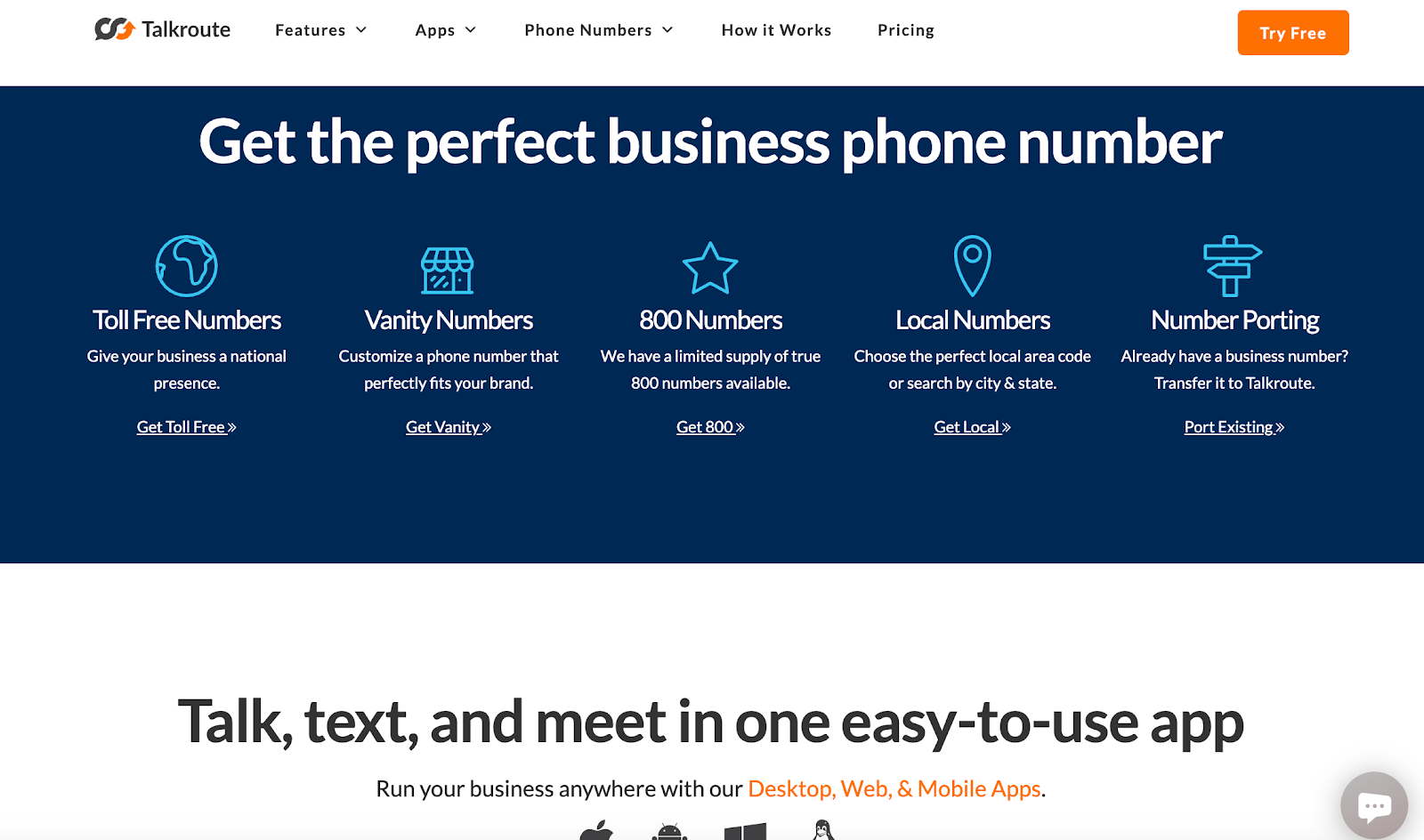
Talkroute is purpose-built for service businesses that live and die by the phone—including solos, boutiques, and multi-location law firms. It’s not a generic VoIP solution designed for call centers or tech startups; it’s designed for practices where every call could be a new client worth thousands in billable work.
Features particularly relevant to lawyers:
|
Feature |
Benefit for Law Firms |
|---|---|
|
Local and toll-free numbers |
Professional presence in any market |
|
Extensions by attorney |
Direct lines without exposing personal cells |
|
Call recording |
Quality control, compliance, malpractice defense |
|
Text messaging |
Communicate with clients their preferred way |
|
Time-based routing |
After-hours coverage without 24/7 staffing |
|
Call analytics |
Track which marketing drives real cases |
Unlike generic answering service providers, Talkroute gives you full control over call flows. You can keep legal intake in-house while using routing rules for overflow or after-hours coverage. There are no long-term contracts and no expensive hardware to buy.
Talkroute can complement or replace live answering services, giving firms flexibility. Have your staff answer during the day, and let routing rules handle evenings and weekends. Or use Talkroute alongside a legal call center for the efficiency and professionalism that busy people demand.
Security and professionalism are built in: business caller ID on every outbound call, voicemail transcriptions delivered to email, and the ability to keep staff personal numbers completely private. Your clients see only your firm’s professional number, even when their attorney is answering from a cell phone at home.
Fixing phone system mistakes is one of the fastest ways to protect marketing spend and sign more new clients. It’s a win-win: better client service, higher conversion rates, and less money wasted on leads you paid to attract but failed to answer.
Next Steps: Turn Your Phones into a Reliable Intake Machine
Personal cells, poor routing, weak after-hours plans, and bloated phone bills are all solvable. The common thread in all these mistakes is a lack of proper systems and clear ownership. With the right virtual phone platform and someone accountable for intake, these problems disappear.
This week, review your current phone setup using the audit questions described in this article. List every number, every routing rule, every after-hours scenario. Identify your biggest gap—that’s where you start.
Then visit Talkroute’s Law Firm Hub to see the recommended setup for legal practices. The page outlines best-practice configurations for law firms of all sizes, from solo practitioners to multi-office operations handling a large volume of calls across practice areas. Schedule a quick demo or start a trial to see how call flows, routing, and reporting work in practice for your specific needs. You’ll see exactly how Talkroute handles intake for firms focused on client satisfaction and efficiency.
Here’s the crucial truth: every day you delay fixing your phones, you’re likely losing clients you already paid to attract. That Google Ad you’re running right now? Someone might be calling from it while you read this sentence. If your phone system isn’t ready, that lead goes to your competitor.
But with a modern virtual phone system, that leakage stops almost immediately. Your phones become a reliable intake machine instead of a liability. Your marketing finally delivers the value it should. And you stop leaving money on the table with every missed call.
The technology exists. The fix is straightforward. The only question is whether you’ll act on it this week—or wait until you lose another case you’ll never know about.

Stephanie
Stephanie is the Marketing Director at Talkroute and has been featured in Forbes, Inc, and Entrepreneur as a leading authority on business and telecommunications.
Stephanie is also the chief editor and contributing author for the Talkroute blog helping more than 200k entrepreneurs to start, run, and grow their businesses.