
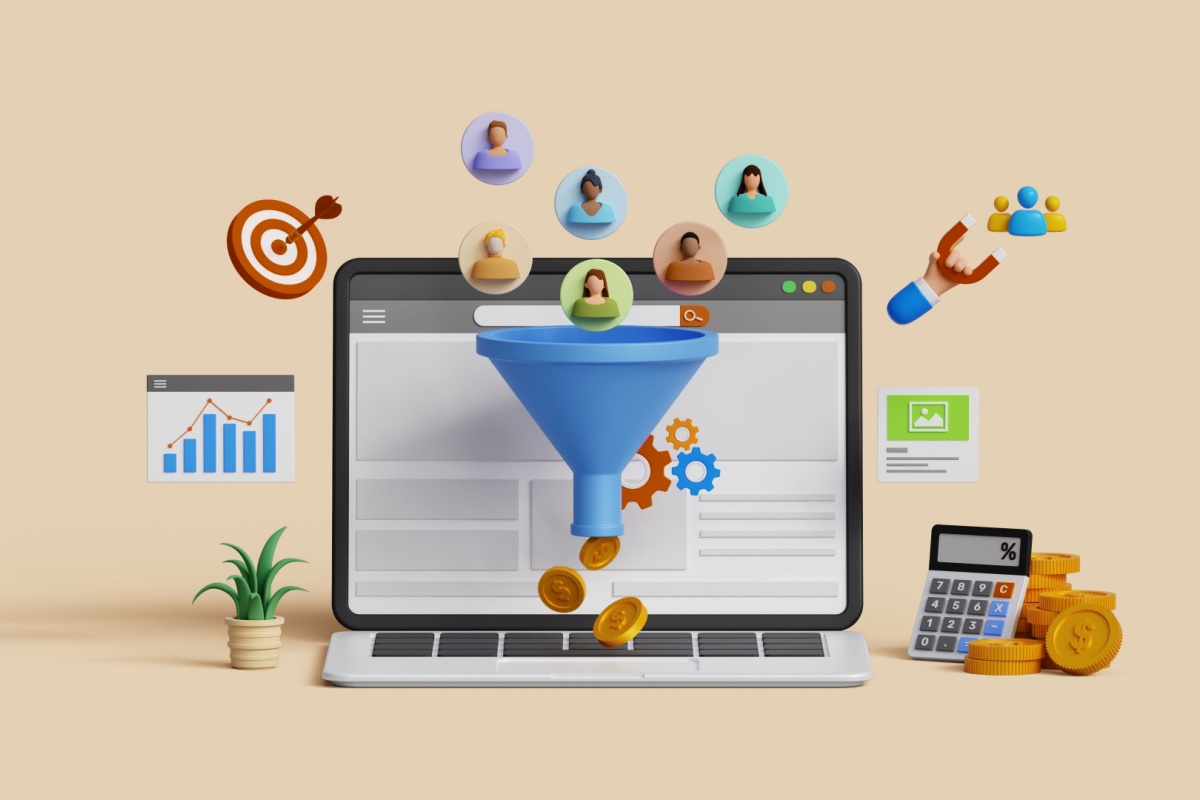
Finding the right lead generation tools for small businesses can feel overwhelming when you’re juggling everything else that comes with running a company. The good news is that you don’t need expensive enterprise software or a massive marketing team to build a steady pipeline of potential customers.
This guide breaks down the best lead generation tools available in 2026, explains the difference between inbound & outbound approaches, and shows you how to build a simple stack that actually drives revenue. So you can choose the right path for your specific business.
Answering Your Question Fast: The 5 Best Lead Generation Tools for Small Businesses in 2026
If you’re looking for concrete recommendations right away, here they are. Most small businesses get the best results from combining a few inbound tools with at least one outbound option, depending on their sales motion.
The core lead generation tools worth considering:
Apollo is an outbound prospecting platform that combines a massive B2B contact database with email sequencing and calling tools. Best for B2B service companies, agencies, and SaaS startups that know their ideal customer profile and want to proactively reach decision-makers.
Leadpages is an inbound landing page builder with drag-and-drop templates, A/B testing, and built-in lead capture forms. Best for local service businesses, coaches, and e-commerce brands running ads or promotions who need high-converting pages without a developer.
Transpond is an email marketing and automation platform that turns sign-ups into paying customers through automated sequences and broadcasts. Best for any small business that wants to nurture leads consistently rather than relying on one-off email blasts.
Simple CRM like HubSpot CRM Free or Pipedrive keeps all your leads organized in one place with deal tracking and follow-up reminders. Best for any small business that’s outgrown spreadsheets and needs visibility into their sales pipeline.
Live chat or chatbot tools like Tidio or Intercom Starter captures leads directly from your website & answers common questions in real time. Best for businesses with moderate website traffic who want to convert more site visitors into conversations.
The rest of this article will help you understand when to use inbound vs outbound tools, how each platform fits into your lead generation strategy, and how to build a simple stack that works for your specific situation.
What Are Lead Generation Tools for Small Businesses?
Lead generation tools are software products that help you attract, capture, and follow up with potential customers across channels like your website, email, social media, and phone. They automate the repetitive work of finding new leads and moving them through your sales process.
The simplest way to think about these tools is to split them into two categories based on who initiates contact.
Inbound lead generation tools help people find you. They support strategies where prospects discover your business through search engines, social media, referrals, or content, then voluntarily share their contact details. Examples include landing page builders like Leadpages, email marketing platforms like Transpond, website forms, popups, and chat widgets.
Outbound lead generation tools help you find people. They support proactive outreach where you identify ideal prospects and contact them directly through cold email, calls, LinkedIn, or direct mail. Examples include B2B contact databases like Apollo, email finders, and sequencing platforms that automate multi-step outreach.
Small businesses typically combine two to four tools rather than investing in massive enterprise platforms. Budget and simplicity matter when you’re running lean. The goal is to build a tech stack where everything integrates cleanly, leads flow into a central CRM, and you can actually measure what’s working.
This article focuses on tools that are affordable, easy to start with in 2026, and integrate with basic CRMs without requiring custom development or a dedicated operations person.
Why Lead Generation Tools Matter for Small Businesses

Lead generation has always been important, but in 2026 it’s become critical for small businesses facing rising ad costs, more competition for attention, and buyers who expect personalized experiences. The businesses that invest in the right tools gain a significant advantage over those still relying on manual processes or scattered systems.
Good lead generation software creates what you might call a broad funnel with strong downstream conversion. This means capturing many leads cost-effectively at the top while having the data, automation, and processes to close more of them at the bottom. It’s not just about generating more leads—it’s about generating leads you can actually convert into loyal customers.
Here’s what the right tools actually do for a small business:
Saving time and headcount becomes possible when you automate follow-up sequences, lead qualification, and data entry. A solo founder or small sales team can handle the same volume that used to require multiple hires. Marketing automation and sales automation tools handle the repetitive touchpoints while your team focuses on conversations that require a human.
Improving lead quality happens when you use better targeting and conversion tracking. Instead of casting a wide net and hoping, you identify your target audience precisely, capture lead data that tells you who’s actually interested, and focus your energy on high value prospects most likely to buy.
Increasing conversion rates comes from sending the right message at the right time. Welcome sequences, behavior-triggered emails, and timely follow-ups can dramatically improve how many leads become customers. This is where email marketing platforms and marketing automation really pay off.
Getting reliable reporting means knowing which channels, campaigns, and messages are driving revenue—not just clicks. You can make smarter decisions about where to spend your budget when you have actual data on lead tracking and conversion tracking.
Consider a small marketing agency in Austin running Facebook and Instagram ads to a lead magnet. They use Leadpages to create a high-converting landing page for a free audit offer, then Transpond to send a 5-email welcome series that educates prospects and books discovery calls. Without these tools, they’d be manually following up with each lead, losing potential customers in the chaos, and having no idea which campaigns were profitable. With them, they’ve turned ad clicks into a predictable stream of booked calls.
Inbound vs Outbound Lead Generation: Explained Simply
The distinction between inbound and outbound lead generation comes down to one simple question: who speaks first? Understanding this helps you pick the right lead generation platforms for your situation.
Inbound lead generation is when people come to you. They search for something on Google, click a social media post, hear about you from a friend, or find your content somewhere online. They’ve already expressed some level of interest before you ever talk to them. The common inbound tools include landing page builders, popups and lead capture forms, email marketing platforms, chat widgets, and webinar software. The leads tend to be warmer because they initiated contact, though building consistent inbound traffic takes time and ongoing content investment.
Outbound lead generation is when you go to them. You identify potential customers who fit your ideal profile and reach out directly through cold email, phone calls, LinkedIn messages, or even direct mail. They haven’t asked to hear from you, but if your targeting is good and your message is relevant, you can start conversations that wouldn’t happen otherwise. Results can come faster since you’re actively initiating conversations, but response rates are lower and you need disciplined processes to avoid coming across as spammy.
When to use which approach:
Inbound works well if people are already searching for what you offer. Local service businesses like plumbers, dentists, or home inspectors benefit from inbound because people actively Google “plumber near me” or “best dentist in Dallas.” Agencies, coaches, and consultants with strong content also do well with inbound because their expertise attracts potential customers.
Outbound works well if you sell B2B, have a clearly defined ideal customer profile, and your solution isn’t something people search for regularly. SaaS companies targeting specific industries, consultants selling to enterprises, or agencies pursuing retainer clients in particular verticals often need outbound communication to reach the right decision-makers.
Many small businesses benefit from a hybrid approach—using inbound to capture organic interest and outbound to proactively target high-value accounts. The rest of this article maps specific tools including Apollo, Leadpages, and Transpond to these inbound and outbound use cases.
Core Inbound Lead Generation Tools for Small Businesses
This section focuses on tools that attract and convert website visitors, social media followers, ad clickers, and anyone else who’s already showing some interest in what you offer. These are the tools that help you capture leads from existing demand.
For most small businesses, inbound lead generation tools are the best place to start. If you’re already getting website traffic, running ads, or posting on social media, these tools help you turn that attention into actual contacts you can follow up with.
The main categories of inbound tools include landing page and website builders that create conversion-focused pages, forms and popups and lead capture widgets that collect contact details, email marketing and automation platforms that nurture leads over time, live chat and chatbots that engage visitors in real time, and webinar and event tools that generate leads through educational content.
Each of the following subsections covers a specific tool or tool type with concrete small-business use cases.
Leadpages: High-Converting Landing Pages and Forms
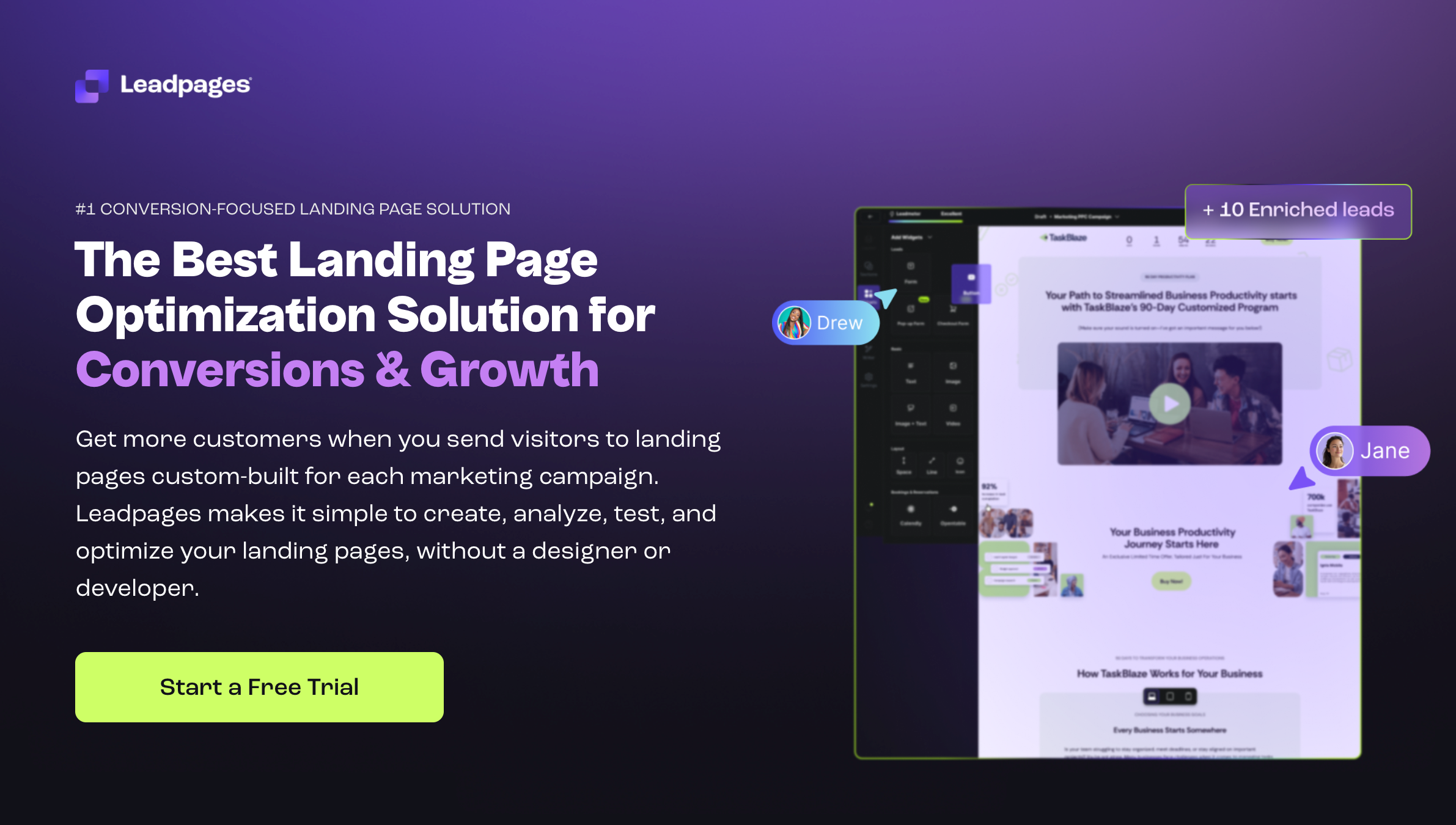
Leadpages is a drag-and-drop landing page and website builder designed specifically for small businesses that need to convert traffic into leads without hiring a developer. It’s one of the top lead generation tools for businesses running ads or promotions who want professional lead capture pages up quickly.
The typical use cases for Leadpages include running Google or Facebook ads to a lead magnet like a free guide or consultation offer, creating standalone pages for seasonal promotions like Black Friday deals or summer specials, and testing different headlines and images with built-in A/B testing to improve conversion rates over time.
The platform offers several features that matter for small business lead generation. Ready-made templates cover common scenarios for local services, coaches, consultants, and e-commerce stores so you’re not starting from scratch. Built-in forms and popups connect directly to email tools like Transpond. Integrations with CRMs and payment processors keep everything connected.
Consider a plumbing company in Denver that wants to capture more quote requests. They create a simple Leadpages landing page with the headline “Get Your Free Plumbing Quote in 24 Hours,” a short form asking for name, email, phone, and a brief description of the issue, and a clear call-to-action button. They run local Google Ads pointing to this page instead of their generic homepage. The focused landing page converts at three times the rate of their homepage because it’s designed for one specific action.
Leadpages sits in the mid-range pricing tier with a free trial available, making it accessible for small businesses without requiring enterprise-level investment.
Try Leadpages Today
Transpond: Email Marketing and Automation That Nurtures Leads
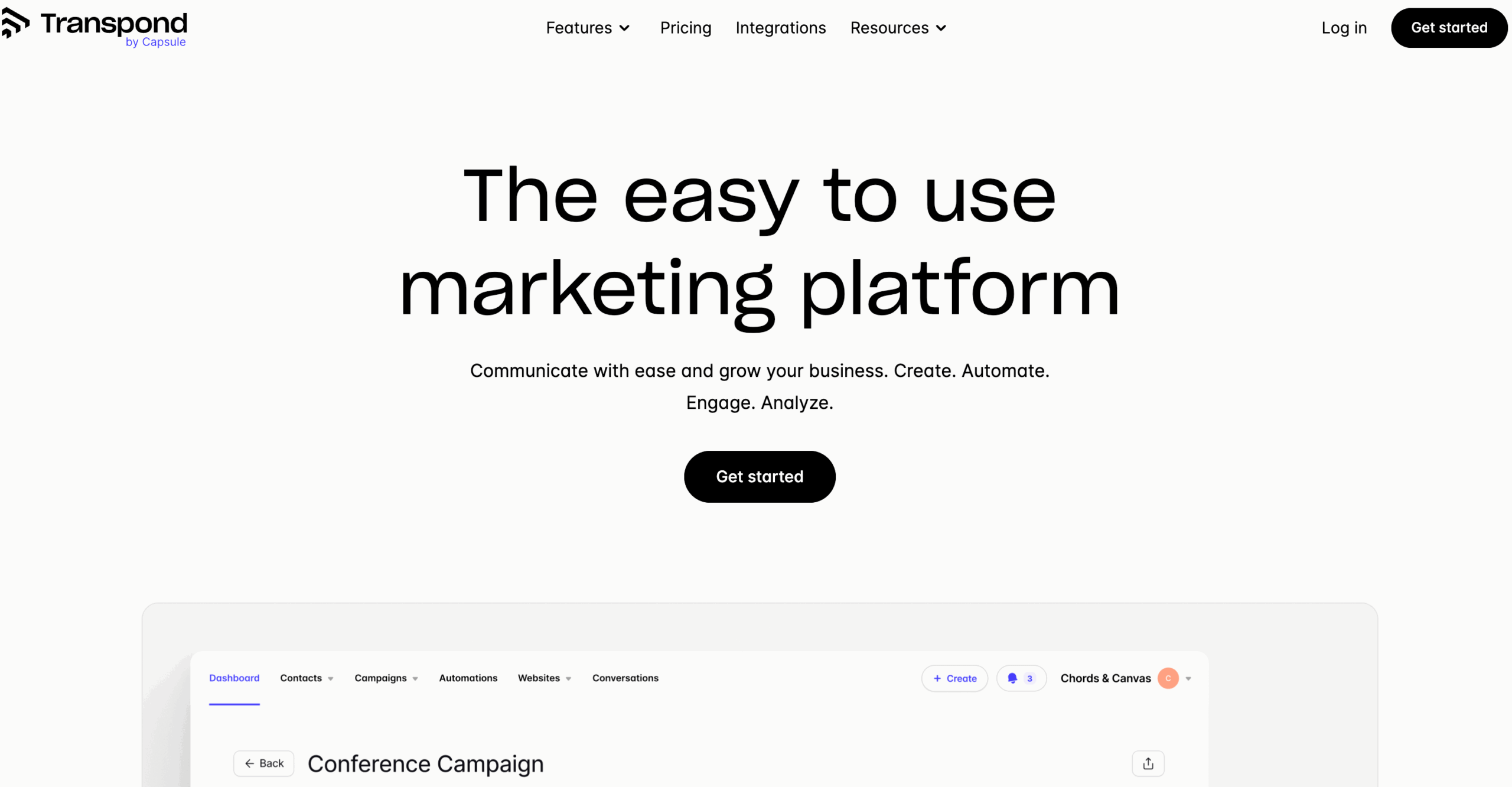
Transpond is an email marketing and automation platform built for small businesses that want to turn sign-ups into paying customers through consistent, automated communication. It handles everything from welcome sequences to promotional broadcasts.
Here’s how Transpond fits into an inbound lead generation funnel. When leads are captured via Leadpages forms or website forms, they automatically get added to Transpond lists based on what they signed up for. Automated welcome sequences then educate and warm those leads over a few days or weeks, building trust and moving them toward a purchase or booking. Broadcast newsletters promote new offers, events, and content to your entire list or specific segments.
The practical features that matter for small businesses include a drag-and-drop email editor with mobile-friendly templates so your emails look professional on any device. The visual automation builder lets you create sequences like “new lead → send welcome series → wait 3 days → send follow-up offer” without any coding. Reporting on open rates, click-through rates, and revenue per campaign helps you optimize over time.
An online yoga studio offers a useful example. When someone signs up for a free class video, they automatically receive a 7-day “Getting Started with Yoga” email course through Transpond. Each email delivers value while also mentioning the studio’s monthly membership. By the end of the sequence, leads are warmed up and many convert to paying members—without the studio owner having to manually send anything.
Transpond works best for inbound-heavy small businesses that want consistent, automated nurturing rather than just occasional email blasts. It turns the effort of capturing leads into actual revenue by ensuring no lead falls through the cracks.
Try Transpond Today
Other Useful Inbound Tools (Forms, Chat, Webinars)
Beyond Leadpages and Transpond, a few lightweight tools can significantly improve inbound conversions for small businesses without adding complexity.
Form and popup tools like OptinMonster or Sumo capture emails on your existing website without requiring a complete landing page redesign. They offer features like exit-intent popups that trigger when someone’s about to leave, scroll-triggered forms, and floating bars. These make sense if you already have decent website traffic and want to capture more of it without rebuilding pages. They integrate with email platforms like Transpond so new leads flow directly into your nurture sequences.
Live chat and chatbot tools like Tidio or Intercom Starter engage website visitors in real time, answering common questions and collecting contact details from interested prospects. If you’re getting at least a few hundred visitors per month and your offering requires some explanation, a chat widget can capture leads that would otherwise leave without taking action.
Simple webinar tools like Demio help businesses that sell through education and demos. A small B2B software startup might host a monthly demo webinar to generate trial sign-ups. Attendees who show up for a live presentation are typically much more qualified leads than passive website visitors. Webinars work best when your product or service requires explanation and when you can commit to a regular schedule.
The key with all of these inbound tools is making sure they connect to your CRM or email platform. Every new lead should flow into the same database so your sales team has one unified view of all potential customers.
Core Outbound Lead Generation Tools for Small Businesses
Outbound lead generation tools help small businesses proactively reach out to ideal customers instead of waiting for them to find you. These tools are essential when your target market isn’t actively searching for your solution or when you need to reach specific decision-makers at target companies.
Outbound is particularly powerful in several situations. New B2B services with low search volume can’t rely on SEO because people aren’t Googling for solutions they don’t know exist. Niche products targeting specific industries need to find buyers directly rather than hoping they stumble across your website. Agencies seeking retainer clients in a defined geography or vertical often need to identify and pursue ideal prospects rather than waiting for inbound inquiries.
The key categories of outbound tools include contact data and prospecting databases that identify who to reach, email finding and verification services that ensure you have accurate contact details, outreach and sequencing platforms that automate multi-step campaigns, and LinkedIn and social selling assistants that support relationship-building on professional networks.
The next subsection focuses on Apollo as the central outbound tool, with notes on how it connects with the rest of your lead generation stack.
Apollo: Outbound Prospecting, Data, and Sequences in One Place
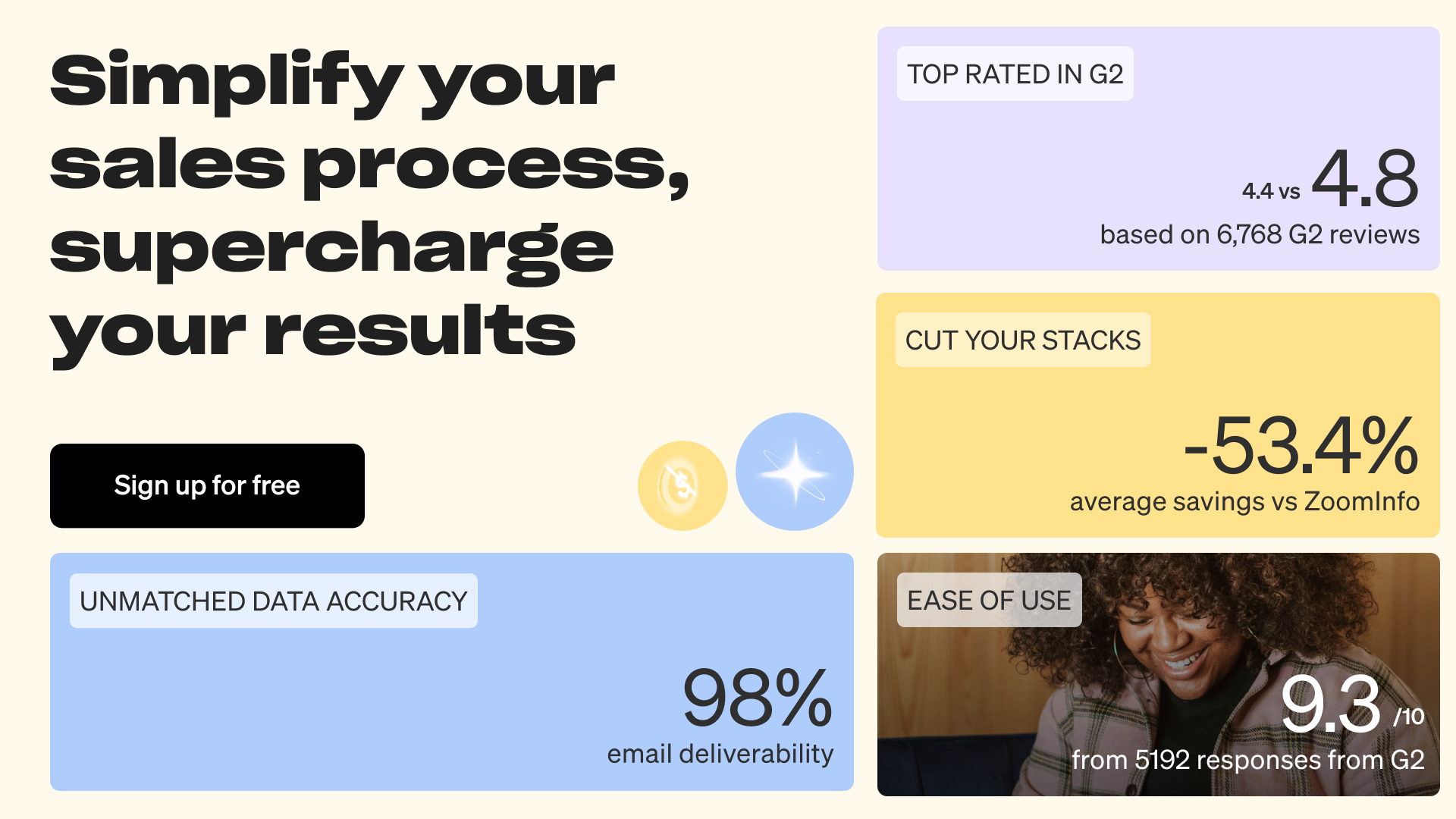
Apollo is a combined B2B contact database, email finder, and outreach platform that’s become a go-to lead gen tool for startups and small businesses with outbound sales motions. It combines functions that used to require three or four separate tools into one platform.
The core use cases for small businesses using Apollo include building highly targeted prospect lists by industry, company size, job title, technology used, and location. You can find verified email addresses and sometimes phone numbers for specific decision-makers. The platform runs multi-step cold email sequences with personalized messages and automated follow-ups.
Here’s what Apollo offers that matters for small business lead generation. The large B2B contact database covers millions of companies and contacts globally, with filters that let you get extremely specific about your target audience. Built-in email verification reduces bounces and protects your sender reputation so your emails actually reach inboxes. Engagement signals like opens, clicks, and replies help you prioritize which potential leads to focus on.
Consider a boutique HR consulting firm that wants to book more discovery calls with mid-sized companies. They use Apollo to build a list of HR Directors at companies with 500 to 2,000 employees in the UK. Apollo sends the emails automatically, tracks engagement, and logs all activity. The consulting firm books three to five qualified calls per week from a campaign that runs mostly on autopilot.
Apollo serves as a single hub for outbound lead generation efforts, reducing tool sprawl and keeping all prospecting data in one place. For small teams that can’t afford separate databases, email finders, and sequencing tools, it’s one of the best lead generation software options for B2B outbound.
Try Apollo Today
Supporting Outbound Tools (Calendars, LinkedIn, and CRM Sync)
Outbound success depends not just on finding and contacting prospects, but on managing the conversations efficiently once they respond. A few supporting tools make the difference between leads that convert and leads that disappear.
Calendar scheduling tools like Calendly eliminate the back-and-forth of booking meetings. You include a scheduling link directly in your outbound emails, and interested prospects book themselves into available slots. This reduces friction significantly—when someone replies to your cold email, they can book a call in seconds rather than waiting for you to respond with available times.
LinkedIn tools support the research and relationship-building that makes outbound more effective. Sales Navigator helps you find additional contacts at target companies and see mutual connections. Even without paid tools, using LinkedIn to view a prospect’s profile before reaching out, or sending a connection request alongside your email sequence, can warm up cold outreach.
This connects back to the “broad funnel, strong downstream conversion” idea. Outbound tools like Apollo fill your calendar with conversations, while the CRM ensures disciplined follow-through and closing.
Small businesses should avoid overcomplicating their outbound stack. Two to three well-integrated tools—a prospecting platform, a scheduler, and a CRM—are usually enough to run professional outbound campaigns.
Building a Simple Small-Business Lead Gen Stack (Inbound + Outbound)
Most small businesses get the best results by combining a lean set of inbound and outbound tools rather than buying everything they see recommended. The goal is a simple stack where tools integrate cleanly, data flows into one place, and you can actually manage the system without a dedicated operations person.
Here are three archetypal stacks that work for different lead generation software needs:
Inbound-first stack: Leadpages + Transpond + chat widget + basic CRM. This works best for businesses where potential customers are already searching for what you offer. Local service businesses, coaches, consultants with content strategies, and e-commerce brands running ads all benefit from this approach. You’re capturing existing demand through landing pages, nurturing with email, and converting through chat and follow-up. A small team can realistically handle 100 to 500 new leads per month with this setup.
Outbound-first stack: Apollo + CRM + scheduling link + simple website. This works best for B2B businesses with a clear ideal customer profile where prospects aren’t actively searching. Agencies targeting specific verticals, consultants selling to enterprises, and SaaS companies in niche markets often start here. You’re proactively finding and contacting the right people rather than waiting for them. A solo founder or small sales team can manage 50 to 200 outbound contacts per week.
Hybrid stack: Apollo + Leadpages + Transpond + CRM. This combines both motions and works for businesses that want to capture inbound demand while also pursuing strategic outbound targets. A growing B2B company might use Leadpages to convert organic traffic and ad clicks while Apollo prospects into key accounts. Transpond nurtures both lead sources. This requires more coordination but produces a fuller pipeline.
The critical element across all stacks is how data flows. All leads should be stored in one CRM so your sales team has a single source of truth. Inbound sources from Leadpages and your website should feed directly into email automation in Transpond. Outbound campaigns from Apollo should log all activities and responses back to the CRM. When everything connects, you avoid the chaos of scattered leads in different systems.
Well-integrated, simple stacks consistently drive more revenue than a scattered collection of different lead generation software that don’t talk to each other.
How to Choose the Right Lead Generation Tools for Your Small Business
Tool choice should follow strategy and constraints, not the other way around. Before evaluating features and pricing, get clear on what you’re actually trying to accomplish and what resources you have to work with.
The key decision factors to consider when selecting lead generation tools include your primary motion—is your business better suited to inbound, outbound, or a hybrid approach in 2026? Think about your budget and expected ROI within three to six months, because tools only pay off if they generate more revenue than they cost. Consider your team size and technical skills, whether you can handle some DIY setup or need something extremely simple. Factor in existing tools and integrations, especially if you already have a CRM in place.
Here’s a simple four-step evaluation process:
First, define your ideal customer profile and identify your best acquisition channels. If you know exactly who you’re selling to, you can choose tools optimized for reaching them. A local landscaping company has very different needs than a SaaS startup selling to HR teams.
Second, decide on an inbound, outbound, or hybrid approach based on how your potential customers buy. Do they search for solutions like yours? Can you create content that attracts them? Or do you need to identify and contact them proactively?
Third, shortlist two to three tools in each category. Compare Apollo versus other prospecting databases. Compare Leadpages versus other landing page builders. Look at Transpond alongside other email marketing options. Read reviews from businesses similar to yours.
Fourth, use free trials or low-tier paid plans for 30 days, measuring actual leads generated and revenue impact. Don’t commit to annual contracts until you’ve proven a tool works for your situation.
Standardize on a small, interoperable stack instead of constantly switching tools. Every migration costs time and risks losing lead data.
Putting It All Together: Inbound vs Outbound Tools That Actually Drive Revenue
Inbound lead generation attracts people who are already looking for what you offer, using tools like Leadpages for landing pages and Transpond for email nurturing. Outbound lead generation helps you find and contact ideal prospects proactively, using tools like Apollo for prospecting and sequencing.
The most effective small businesses don’t choose one approach exclusively—they build a stack that creates a broad funnel with strong downstream conversion. The broad funnel comes from Leadpages pages and forms capturing inbound interest plus Apollo prospecting lists identifying outbound targets. The strong conversion comes from Transpond nurturing sequences keeping leads warm plus a CRM ensuring disciplined follow-up until deals close.
This combination matters because generating more leads means nothing if you can’t convert them into quality leads and eventually into customers. Every tool in your stack should connect to that end goal: turning contacts into revenue.
Take an honest look at your current situation and map it to one of the stack archetypes from this article. If you’re getting traffic but not capturing it, start with Leadpages and lead capture forms. OR say you have a clear B2B target but not enough conversations, start with Apollo. If you’re capturing leads but they’re going cold, implement Transpond for nurture leads sequences.
Pick one or two tools to test in the next 30 days. Start small, integrate tightly, and focus relentlessly on converting leads into revenue—not just collecting contacts. The best lead generation strategy isn’t about having the most tools. It’s about having the right lead generation software working together to simplify lead generation and grow your business.
Disclaimer: This post may include affiliate links.

Stephanie
Stephanie is the Marketing Director at Talkroute and has been featured in Forbes, Inc, and Entrepreneur as a leading authority on business and telecommunications.
Stephanie is also the chief editor and contributing author for the Talkroute blog helping more than 200k entrepreneurs to start, run, and grow their businesses.