

A toll-free number is defined as a telephone number that costs nothing for the caller to dial, with all charges billed directly to the business receiving the call. For small business owners, learning to set up a toll-free business number is one of the fastest ways to build credibility and remove friction from customer contact. 56% of small businesses believe toll-free numbers enhance their professional image. That perception gap between businesses that have one and those that don’t is real money on the table.
What do you need before setting up a toll-free number?
Before you pick a number, you need to understand the rules that govern them. Toll-free numbers in the United States fall under the North American Numbering Plan, known as the NANP. The NANP restricts toll-free use to seven specific prefixes: 800, 833, 844, 855, 866, 877, and 888. Each prefix functions identically for callers, but availability and cost vary by prefix.
Choosing the right prefix
The 800 prefix carries the strongest brand recognition because it has been in use the longest. That recognition comes at a price. Setup fees for 800 numbers start at $15 or more, while 888 numbers start around $10, and other prefixes can reach $49 depending on the number type and provider. If budget is tight, a 844 or 855 number delivers the same caller experience at a lower entry cost.

Vanity vs. standard numbers
A vanity toll-free number spells out a word or phrase on the keypad, such as 1-800-FLOWERS. These numbers are powerful for brand recall, but they carry a real risk. Vanity numbers with confusing digit patterns cause dialing errors that damage your brand image. Before committing to a vanity number, test it by reading it aloud to several people and asking them to dial it cold. If they hesitate or mistype it, choose a simpler option. For guidance on picking a number that works, review these selection tips before you search.
| Number type | Best for | Typical setup cost |
|---|---|---|
| 800 standard | Maximum brand recognition | $15+ |
| 888 / 877 / 866 | Budget-conscious businesses | $10–$15 |
| 844 / 855 / 833 | Availability and lower cost | Up to $49 for premium picks |
| Vanity (any prefix) | Memorable brand campaigns | Varies by provider |
You will also need a registered business entity, a payment method, and a forwarding destination. That destination can be a mobile phone, a desk phone, or a cloud-based phone system like Talkroute. No physical hardware is required.
How to set up a toll-free business number step by step
Getting your number active takes less time than most small business owners expect. The process breaks down into four clear steps.
-
Choose a provider that fits your call volume and features. Entry-level providers charge a small setup fee and monthly fee around $2 per number, plus usage-based rates for voice and messaging. Enterprise platforms bundle minutes into flat monthly plans. Match the pricing model to your expected call volume before signing up.
-
Search for and reserve your number. Most providers offer an online search tool. Talkroute’s toll-free number search lets you filter by prefix and check availability in real time. Reserve the number immediately once you find one you like. Desirable numbers, especially 800 numbers with clean digit patterns, get claimed quickly.
-
Configure call routing and forwarding. This step determines where calls go and how they are handled. At minimum, set a primary forwarding destination and a voicemail fallback. Most cloud providers offer visual builders that require no engineering skills to configure routing logic. You can set rules based on time of day, caller input, or agent availability without writing a single line of code.
-
Test the number before going live. Call it from multiple devices, including a mobile phone and a landline. Verify that calls route correctly during business hours and after hours. Check that voicemail records and delivers properly. Only publish the number on your website, business cards, and marketing materials after you confirm every path works.
Pro Tip: Record your voicemail greeting before you test. A professional greeting on the first ring sets the tone for every customer interaction that follows. Talkroute’s voicemail greeting feature lets you upload a custom recording directly from your phone.
How to configure your toll-free number for the best customer experience
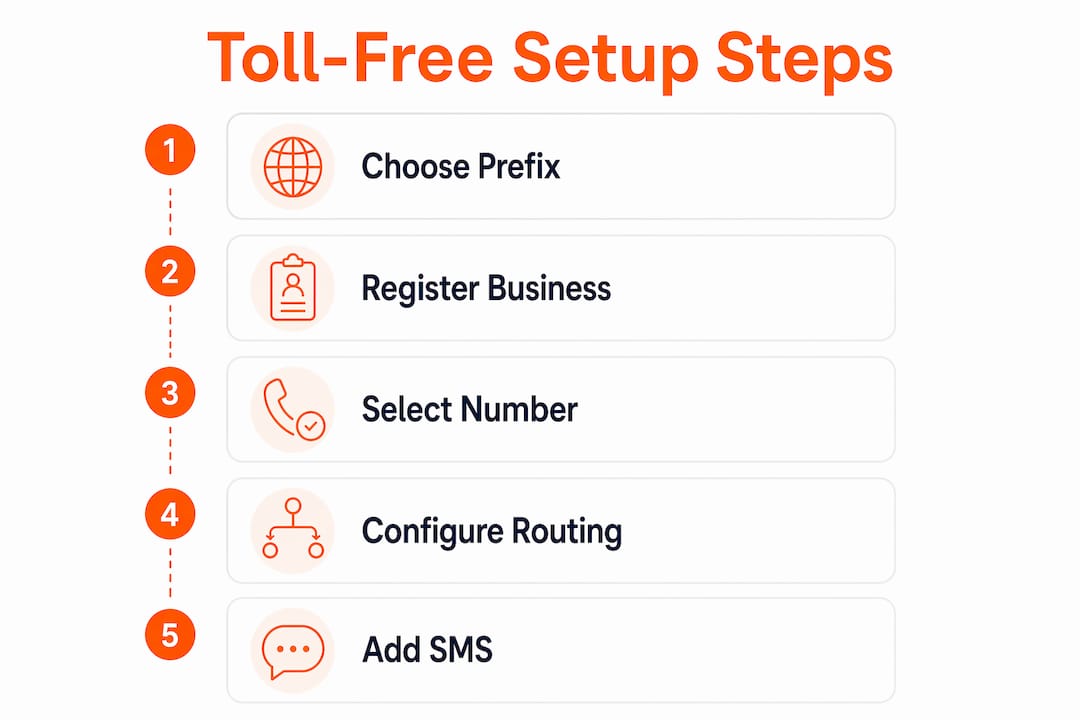
Getting the number is step one. How you configure it determines whether customers have a good experience or hang up frustrated. Effective call routing uses business hours, IVR input, queue logic, and customer attributes to direct calls intelligently. Each of those layers reduces misdirected calls and wait time.
Setting up IVR and routing rules
An IVR, or interactive voice response system, is the menu callers hear when they dial in. A well-built IVR routes callers to the right person or department without human intervention. Keep menus short. Two levels of options are enough for most small businesses. More than three menu layers cause callers to abandon the call. Talkroute’s auto attendant handles this without complex configuration.
Key routing rules to configure from day one:
- Business hours routing: Send calls to live agents during open hours and to voicemail or an after-hours message outside them.
- Department routing: Use IVR to separate sales, support, and billing calls before they reach your team.
- Queue management: Set a maximum hold time. If a caller waits longer than your threshold, offer a callback or voicemail option.
- Geographic routing: If your business serves multiple regions, route calls to the nearest team member automatically.
Adding SMS to your toll-free number
Using one toll-free number for both voice and two-way SMS keeps your brand consistent and improves customer engagement. Customers can text your business number for quick questions without switching to a different channel. This is especially valuable for appointment confirmations, order updates, and follow-up messages. Read more about why text matters for small business communication before you decide whether to activate it.
Pro Tip: Assign a dedicated team member to monitor incoming texts during business hours. Unanswered texts carry the same reputational risk as missed calls.
| Configuration element | Impact on customer experience |
|---|---|
| Business hours routing | Prevents dead-end calls after hours |
| IVR with short menus | Reduces misdirected calls and frustration |
| SMS on toll-free number | Adds a low-friction contact channel |
| Voicemail with callback option | Captures leads that would otherwise be lost |
Integrating your toll-free number with business systems
A toll-free number that sits in isolation is a missed opportunity. Connecting toll-free calls to your CRM logs every conversation and links it to a customer record. That data turns your phone line into a measurable marketing asset rather than a cost center.
Practical integration steps for small business owners:
- Assign unique numbers to campaigns. Use a different toll-free number for your Google Ads campaign versus your print mailer. When calls come in, you know exactly which channel drove them. This is the foundation of call attribution and strong conversion tracking.
- Log calls automatically in your CRM. Most cloud phone systems connect to CRM platforms through native integrations or webhooks. Every inbound call creates or updates a contact record without manual entry.
- Review call recordings and analytics weekly. Listen to a sample of calls each week. You will identify common objections, training gaps, and routing problems faster than any survey can reveal them.
- Monitor cost per minute. Calls to toll-free numbers are billed per inbound minute to the business. Long calls and complex routing add to that cost. Set a monthly budget threshold and review usage reports to stay within it.
Tracking performance is not a one-time task. Call patterns shift with seasons, campaigns, and staffing changes. Build a monthly review into your operations calendar and adjust routing rules when the data shows a problem. For a deeper look at managing call flow, Talkroute’s guide on business call management covers routing, IVR, and integrations in detail.
Key Takeaways
Setting up a toll-free business number requires choosing the right prefix, configuring call routing, adding SMS, and connecting your number to CRM systems for measurable results.
| Point | Details |
|---|---|
| Know your prefix options | NANP allows seven toll-free prefixes; 800 has the strongest recognition but higher setup costs. |
| Test before you launch | Call from multiple devices and verify every routing path before publishing your number. |
| Add SMS from day one | One number for voice and text keeps branding consistent and adds a low-friction contact channel. |
| Connect to your CRM | CRM integration turns every inbound call into a logged, trackable customer interaction. |
| Monitor cost per minute | Inbound minutes are billed to the business; review usage monthly to control costs. |
Why most small businesses get toll-free setup wrong
I have watched small business owners spend an afternoon picking the perfect number and then spend zero time on what happens after the call connects. That is where the real work is. A toll-free number with no routing logic, no voicemail greeting, and no CRM connection is just a vanity purchase. It looks professional on a business card and does almost nothing else.
The businesses that get real value from toll-free numbers treat the number as a system, not a feature. They configure routing rules on day one, assign the number to specific campaigns, and review call data every month. They also pick providers with strong support, because when routing breaks at 9 AM on a Monday, you need someone who answers the phone, not a help article.
Cost expectations also need a reality check. Entry-level plans are genuinely affordable, but per-minute billing adds up faster than most owners anticipate. A busy sales campaign can double your phone bill in a week if you have not set a usage cap. Build that review into your monthly financials from the start.
The upside is real. A well-configured toll-free number signals that your business is established, accessible, and serious about customer service. That signal matters most in the first 10 seconds of a customer’s decision to call or not call. Get the setup right and the number pays for itself.
— Paul
Talkroute makes toll-free setup straightforward for small businesses
Talkroute is built for small business owners who need a professional phone system without the complexity of enterprise hardware. You can get a toll-free number with call routing, an auto attendant, voicemail, and two-way SMS all managed from one dashboard on your existing devices.
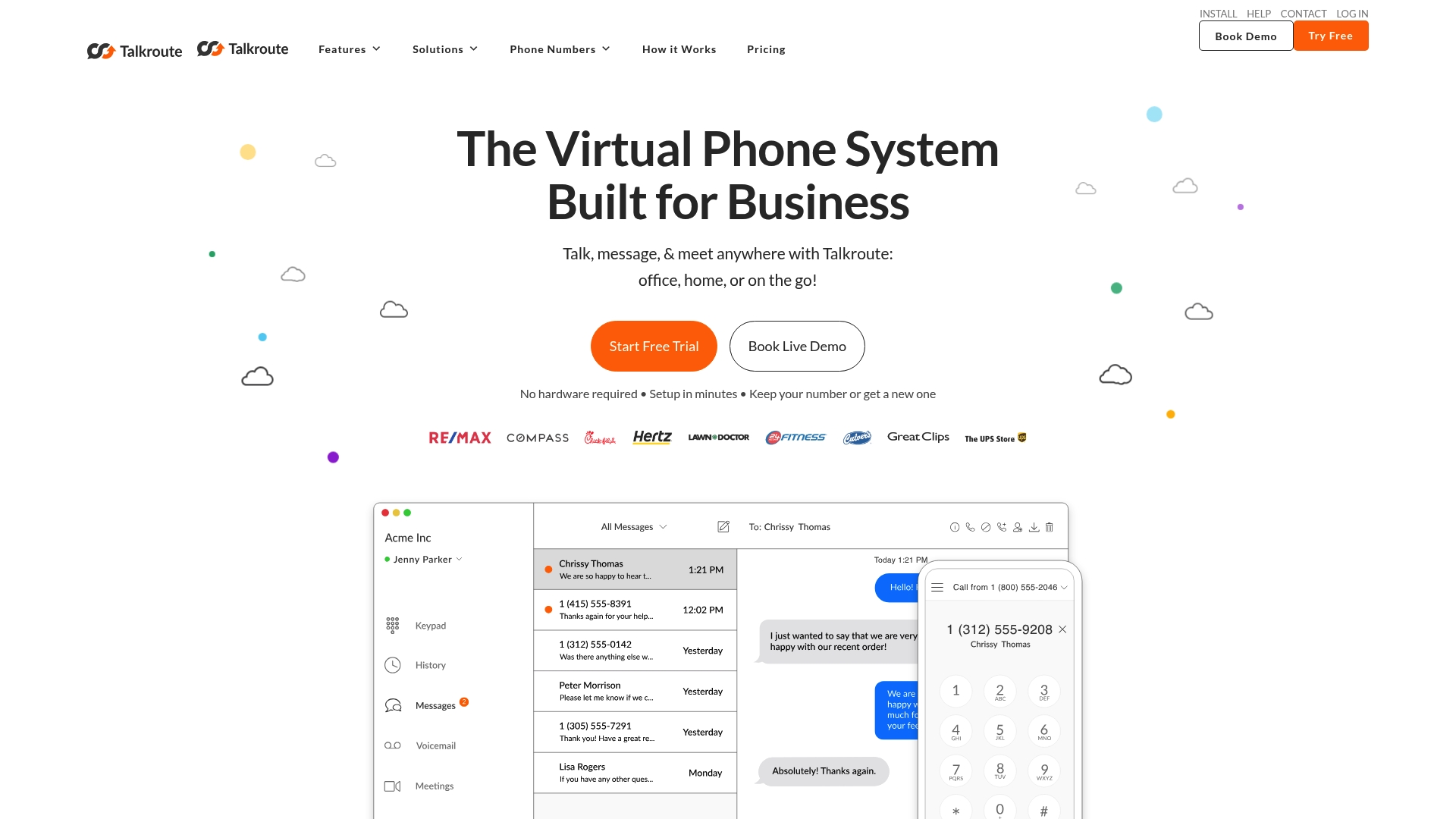
Setup takes minutes, not days. Talkroute’s visual interface lets you configure routing rules, record greetings, and assign team members without technical support. For businesses ready to go further, the call management guide walks through advanced routing and IVR configuration in plain language. No hardware purchases, no long-term contracts, and no engineering degree required.
FAQ
What is a toll-free number?
A toll-free number is a phone number that is free for the caller to dial, with all call charges billed to the business that owns the number. In the U.S., toll-free numbers use NANP prefixes including 800, 833, 844, 855, 866, 877, and 888.
How much does it cost to get a toll-free number?
Setup fees typically range from $10 to $49 depending on the prefix and provider, with ongoing monthly fees and per-minute billing for inbound calls. Some providers charge as little as $2 per month per number plus usage rates.
Can I use a toll-free number for texting?
Yes. Many providers support two-way SMS and MMS on toll-free numbers, letting you use one number for both voice calls and text messages. This keeps your brand contact point consistent across channels.
How long does toll-free phone number setup take?
Most cloud-based providers activate a toll-free number within minutes of registration. Full configuration, including routing rules, IVR, and voicemail, typically takes one to two hours for a small business.
Do I need special hardware to use a toll-free number?
No. Cloud-based platforms like Talkroute route calls to your existing mobile or desktop devices. No physical phone hardware is required to receive and manage toll-free calls.
Recommended
- Toll Free Phone Numbers – Get 800, 888, 877, 866, 855, 844
- Why You Should Give Toll Free Numbers a Try
- Search Toll Free Phone Numbers – Create Your Account
- 5 Keys to Help You Find the Perfect Business Phone Number

Stephanie
Stephanie is the Marketing Director at Talkroute and has been featured in Forbes, Inc, and Entrepreneur as a leading authority on business and telecommunications.
Stephanie is also the chief editor and contributing author for the Talkroute blog helping more than 200k entrepreneurs to start, run, and grow their businesses.